The Budget Document Nobody Reads (But Everybody Lives With)
Last spring, I spent three hours reading my city’s budget proposal in a coffee shop. A friend walked by, saw the 247-page PDF on my screen, and asked if I was being punished. I laughed, but here’s the thing: that document controls where your tax dollars go, which roads get fixed first, whether your neighborhood gets a new traffic light or a community center renovation, and how prepared your city actually is for the next crisis. Most of us never look at it. According to research from Pew, only 21 percent of Americans attended a local government meeting in the past year, even though 68 percent say local government affects their daily life more than what happens in Washington. That gap between what matters and what we pay attention to is exactly where problems hide.
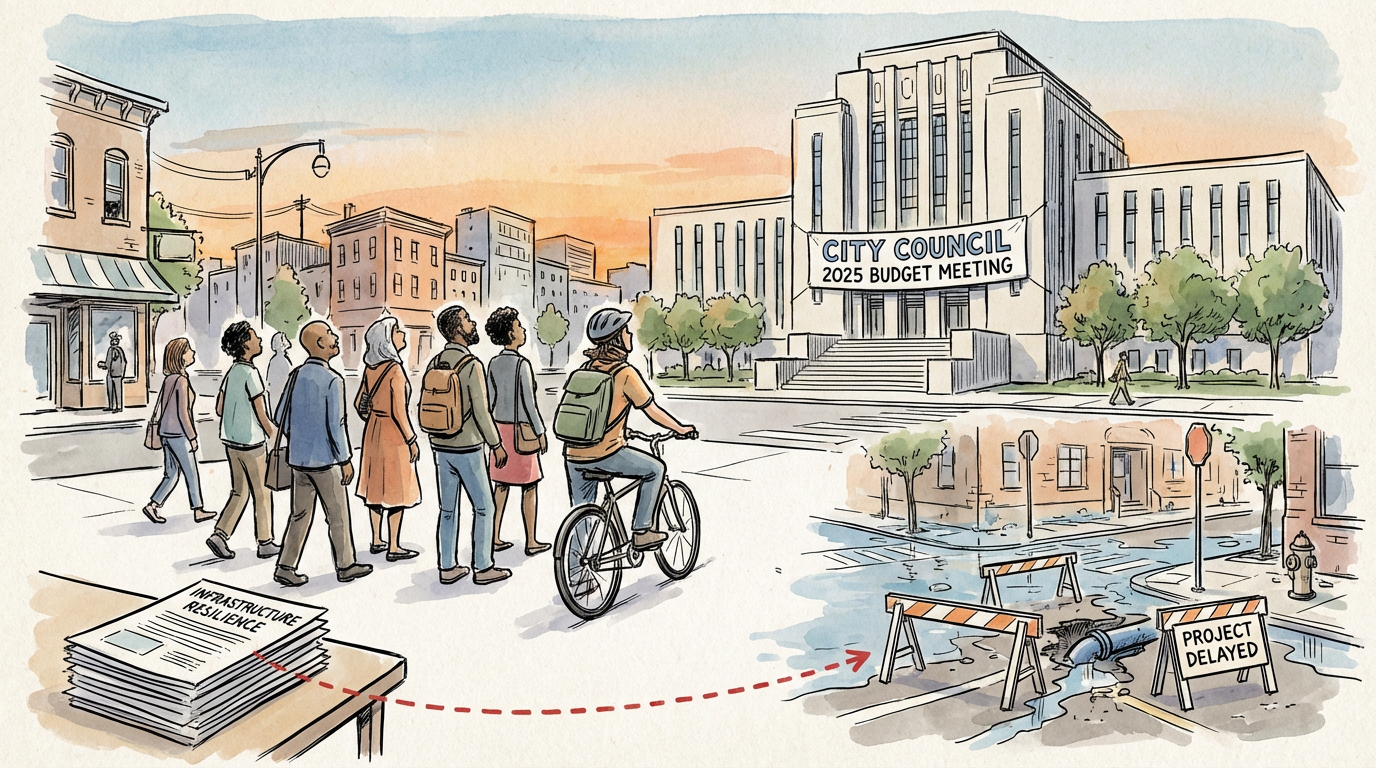
The 2025 budget cycle has been particularly strange. Cities are in a real bind right now. Federal pandemic relief money that kept things running for the past few years has dried up. The National League of Cities Fiscal Conditions Report found that 43 percent of mid-sized cities are now operating with structural budget deficits. That’s not temporary. That’s the new math. Meanwhile, the infrastructure that keeps neighborhoods functioning is crumbling faster than budgets can fix it. The ASCE 2025 Infrastructure Report Card gave American infrastructure a C-minus overall, with an estimated $3.7 trillion funding gap over the next decade. Your city’s budget for 2025 is basically a document about choosing which problems to ignore.

The ‘Infrastructure Resilience’ Trap (And What It Actually Means)
Here’s where that line item should make you nervous. You’ll see phrases like “infrastructure resilience initiatives” or “climate adaptation investments” scattered throughout the budget. They sound important. They are important. But they’re also sometimes how cities disguise the fact that they’re not actually fixing anything. Resilience sounds active. It sounds like preparation. In practice, it often means a study, a consultant report, or a pilot program that might reduce flooding by 8 percent in one neighborhood while leaving everywhere else vulnerable.
The federal government has actually set aside money for real infrastructure work. The 2021 Infrastructure Investment and Jobs Act allocated $1.2 trillion, which sounds like it should solve everything. Except it doesn’t, because there’s a massive implementation problem. A 2025 audit by the Government Accountability Office found that nearly $180 billion in formula grants sat unspent because local governments don’t have the staffing and administrative capacity to apply for and manage these projects. Your city might be walking past hundreds of millions of dollars because they don’t have enough people in the grants department to fill out the paperwork. That’s not a policy failure or a budget line item. That’s an institutional bottleneck that affects whether your street gets resurfaced.
How to Actually Read the Thing (And What to Look For)
I want to tell you that reading a city budget is easy. It’s not. But it’s not impossible either, and doing it gives you power that most of your neighbors don’t have. Start with the summary section. Every city publishes a one or two page overview of the budget. That’s your map. Look for the percentage breakdown. Where does the money actually go? Water and sewer? Police? Parks? Public health? That tells you what your city leadership thinks is important right now.
Then find the capital improvement section. That’s where the big infrastructure projects live. This is the stuff that matters for your neighborhood for the next five to ten years. Is there money for street repairs? Which streets? Flood mitigation? Storm drains? A new park or renovation of an old one? The capital section is where you can see whether the city is actually planning or just reacting. Spot check the numbers against your reality. If your neighborhood street is a pothole convention and there’s no money for street work, you’ve just found a problem worth raising.
Third, look at the fund balance. That’s essentially the city’s savings account. If it’s very low, the city is running tight and will have less flexibility. If it’s higher, the city might have room to do more, or might just be hoarding it. Either way, it tells you something about whether this budget reflects genuine constraints or choices.
The Participatory Budgeting Path (Which Actually Works)
Here’s something that happened in Austin and Boston and a few other places that matters for every neighborhood: when cities let residents actually vote on how some budget money gets spent, everything changes. I’m not talking about a town hall where people complain. I’m talking about participatory budgeting, where residents identify priorities and vote on specific projects. It sounds like it would make things slower and more political. Instead, according to Bloomberg CityLab analysis from late 2025, cities with active participatory budgeting programs saw 34 percent higher resident satisfaction scores on infrastructure responsiveness. People felt like things actually got better because they had a hand in deciding what got fixed.
This matters because it breaks the disconnect between the budget document and your actual life. Right now, the budget is something city staff make and residents react to. Participatory budgeting makes it something you help shape. It also surfaces exactly the kinds of problems that don’t make it into formal processes. That pothole nobody’s tracking. That intersection where elderly residents are afraid to cross. That park that needs maintenance but doesn’t show up as a capital project because it’s small.
What You Can Actually Do Right Now
You don’t need to become an expert on municipal finance to matter here. Three things. First, read the summary of your city’s 2025 budget. Go to your city’s website, find the finance or budget office, download the document, read the executive summary. It’s usually ten pages. Spend an hour with it and coffee. Notice what stands out. Notice what’s missing.
Second, attend one city council meeting. Not to become a fixture or to get angry. Just to see how the budget actually gets discussed and to get a sense of what your council members are thinking. You’ll be shocked by how much gets decided and how few people are paying attention.
Third, talk to three neighbors about what they actually need in the neighborhood. Not in an organizing way. Just ask. Then write it down and send it to your city council member. One email from one resident doesn’t move mountains. But one email from a resident who has actually read the budget and can say “I noticed you allocated $400,000 for infrastructure resilience in District 3, but here’s what we actually need” gets attention. It gets remembered.
The budget is happening whether we pay attention or not. The difference is whether we just accept what gets decided or whether we show up knowing what matters and why.