Start With Your Why (And Be Honest About Your Capacity)
Before you post that enthusiastic Facebook announcement about your neighborhood cleanup or book fair, take a hard look at what you’re actually signing up for. I learned this the hard way when I organized what I optimistically called a “community garden kickoff” that turned into me frantically texting people at 6 AM asking if they owned a shovel. The event happened, the garden got planted, but I spent three weeks recovering from what should have been a fun Saturday morning.
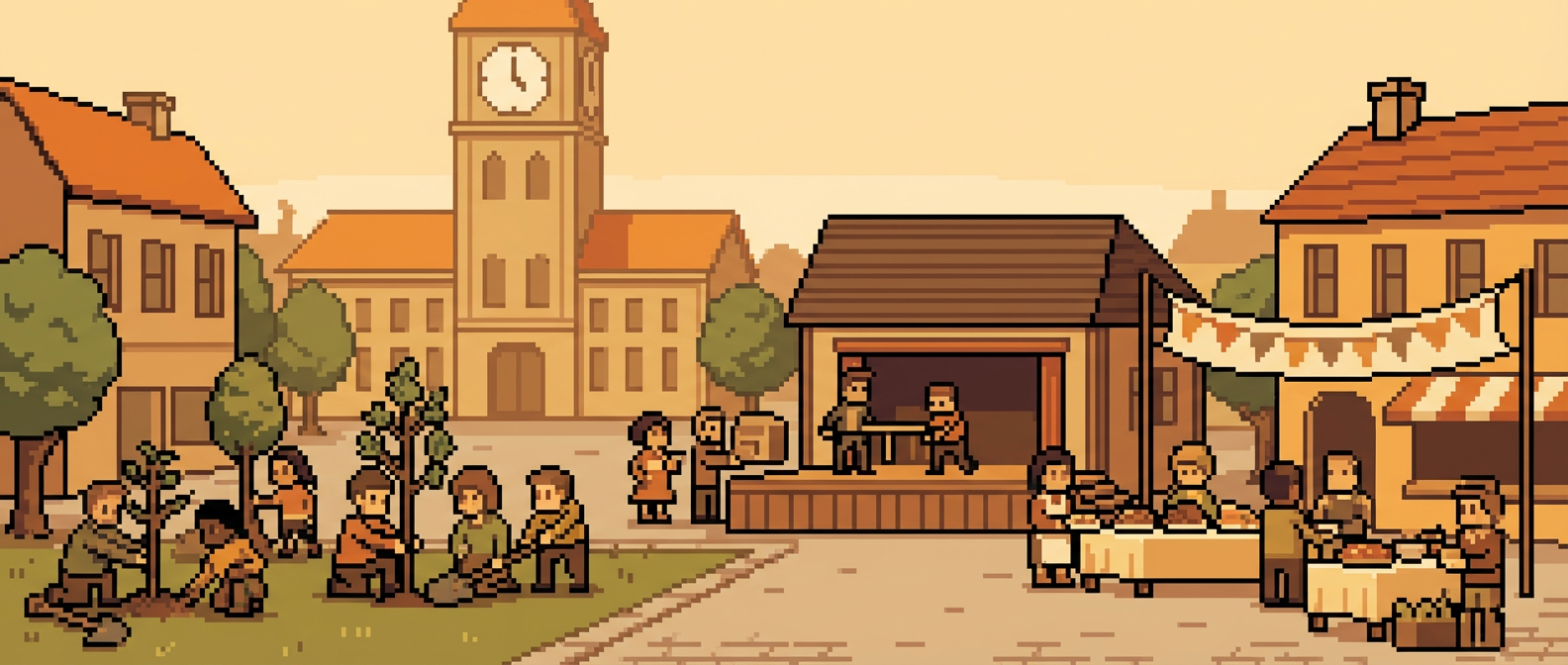
Here’s what actually works: Write down exactly why this event matters and what success looks like. Not the Instagram-worthy version, but the real version. Are you trying to connect neighbors who’ve never spoken? Address a specific problem like lack of safe walking routes? Create ongoing momentum for a larger project? Your why determines everything else, from timeline to volunteer needs to whether you actually need an event at all.
Then get brutally honest about your bandwidth. If you work 50-hour weeks and have two kids, don’t plan a three-day festival. There’s zero shame in organizing a simple coffee meetup that actually happens versus an elaborate block party that crashes and burns. Small events that actually work build trust and capacity for bigger things later.

The Volunteer Reality Check: Quality Over Quantity
The biggest myth in community organizing is that you need tons of volunteers. What you need are the right volunteers at the right time doing tasks that match their skills and availability. I’ve seen events run beautifully with six committed people and others collapse under the chaos of managing thirty well-meaning but uncoordinated helpers.
Start your volunteer recruitment by identifying three specific roles: someone who can handle logistics and timing, someone who’s good with people and can manage day-of coordination, and someone who can problem-solve when things go sideways. Notice I didn’t say “find people willing to help.” Every community has people willing to help. What’s harder to find are people willing to take ownership of specific pieces.
When you approach potential volunteers, be specific about what you’re asking for and realistic about the time commitment. “Can you help with our tree planting?” gets you maybe responses. “Can you coordinate with the city to mark underground utilities and manage the tool checkout table from 9 to 11 AM on Saturday?” gets you actual answers. People appreciate honesty about what they’re signing up for, and clear expectations prevent that awkward situation where someone shows up expecting to plant one tree and discovers they’re suddenly in charge of managing fifty volunteers.
Always have backup plans for key roles. The most reliable volunteer coordinator I know got food poisoning two hours before a neighborhood safety walk. The event succeeded because we’d already identified who could step in for each essential task.
Navigating Permits, Insurance, and Other Fun Bureaucracy
Let’s talk about the stuff nobody wants to deal with but everyone needs to know. Most community events require some level of official approval, and pretending otherwise is how you end up with angry calls from city hall or worse, liability issues when someone gets hurt.
For events in public spaces, start with your city’s website or call the parks and recreation department. Yes, even for that small neighborhood cleanup. Many cities have streamlined processes for community events, and the staff are usually helpful once you reach an actual human. The key is asking specific questions: Do you need a permit for X number of people? Is there insurance coverage for volunteer activities? What about parking and restroom access?
Here’s where having that person who reads city council minutes pays off. They often know which staff members are most responsive and what the actual (versus official) timeline looks like for permit approval. Don’t be afraid to leverage existing relationships and local knowledge.
Budget at least six weeks for any permit process, even for simple events. I know that feels like forever when you’re excited about your idea, but rushing this stuff creates unnecessary stress and sometimes means your event can’t happen at all. If you’re planning something that involves food, vendors, or anything that could remotely be considered a festival, add another month to that timeline.
Money, Logistics, and Making It Actually Happen
Community events don’t have to cost a fortune, but they do cost something, and pretending otherwise sets you up for failure. Even a simple park cleanup needs trash bags, some basic tools, and probably water for volunteers. Make a real budget that includes the small stuff: permits, supplies, signage, and a modest contingency fund for when the weather doesn’t cooperate or you need more tables than you thought.
Look for creative funding solutions that don’t rely entirely on your personal credit card. Local businesses often contribute supplies in exchange for recognition. Hardware stores might donate tools or materials. Coffee shops sometimes provide refreshments for volunteers. The key is asking for specific things rather than vague “sponsorships” and giving businesses clear information about what they’re supporting and who they’ll reach.
For logistics, make lists of everything and then make lists of your lists. Where exactly will people park? What happens if it rains? Who’s bringing the extension cord, and do you know where the nearest outlet is? These details seem obvious until they’re not. Working through them ahead of time prevents day-of scrambling.
Communication is where most events succeed or fail. Create a simple system for keeping volunteers informed, whether that’s a group text, email chain, or shared document. Update it regularly, including when nothing has changed. People need to know they’re still expected and that someone’s in charge.
Building on Success and Learning From What Didn’t Work
The real measure of a successful community event isn’t just what happens on the day, but what happens afterward. Did people exchange contact information? Are they talking about the next opportunity? Did you solve the problem you set out to address or at least make meaningful progress?
After every event, do a brief post-mortem with your core team. What worked well? What would you do differently? What did you learn about your community’s needs and interests? This isn’t about being critical, but about building institutional knowledge that makes later events easier and more effective.
Keep track of practical details too: which suppliers were reliable, what the actual costs were, how long setup really took. People organizing events next year (including yourself) will thank you for writing this stuff down while it’s fresh.
Whether your tree planting day attracted five people or fifty, whether your neighborhood meeting led to immediate action or just better relationships, you’ve contributed something valuable to your community. The goal isn’t perfection. It’s connection and progress. And if you’re reading this because you’re thinking about organizing something, chances are good that your community needs exactly what you’re considering. Start small, be realistic about what you can handle, and remember that showing up consistently matters more than staging the perfect event.