When Safety Grows From Connection
Last Tuesday evening, Maria Santos was walking her dog past the corner of Maple and Third when she noticed something odd. A man was lingering near Mrs. Chen’s back gate, testing the latch. But instead of hurrying past or calling 911 immediately, Maria did something that might have seemed small but turned out to be huge: she called out a friendly hello and asked if he needed directions.
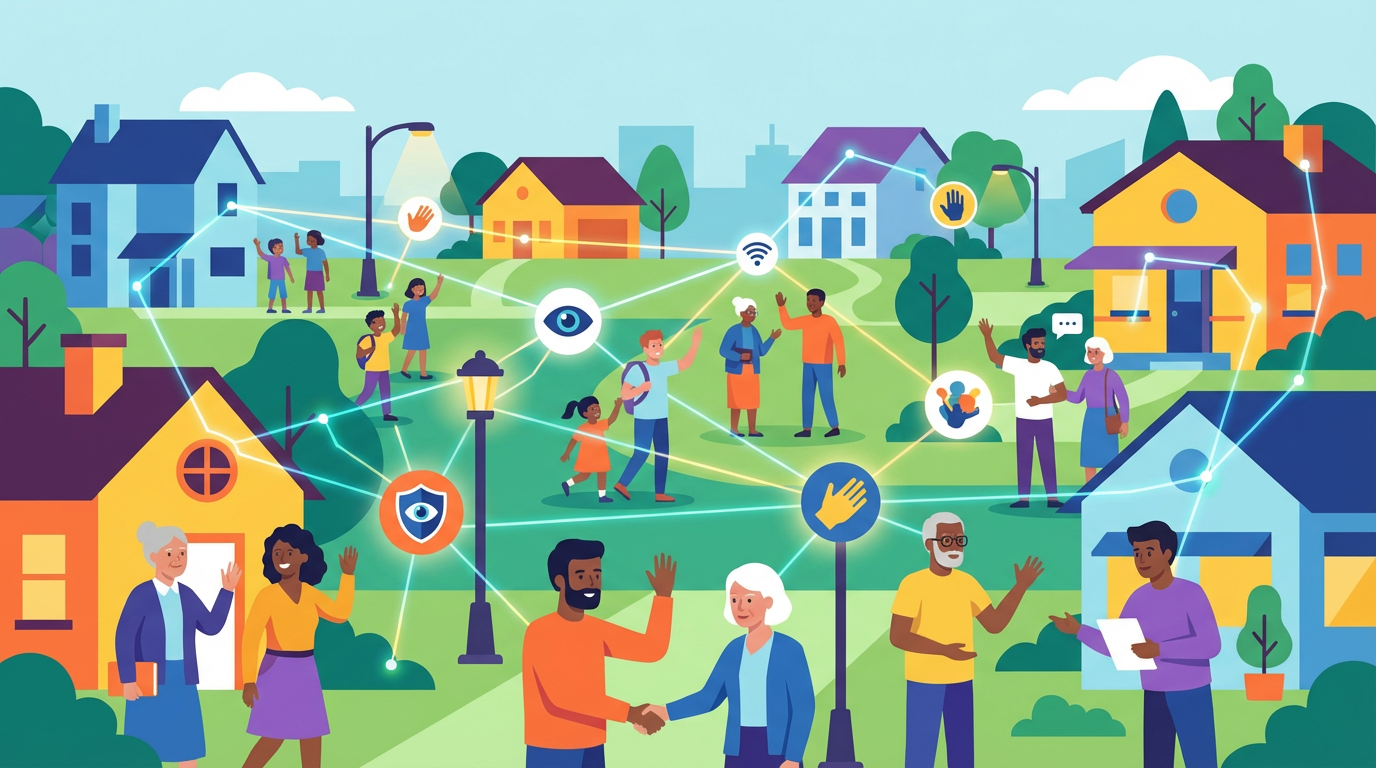
The guy took off. When Maria mentioned it to Mrs. Chen later that week over their shared fence, they both realized something had worked. Maria knew Mrs. Chen well enough to spot when something looked wrong at her place. Mrs. Chen trusted Maria enough to talk about her worries about break-ins lately. And they both felt comfortable stepping in when it mattered.
This is what actual neighborhood safety looks like these days. Sure, cameras and security systems help. But real safety means knowing who belongs and who doesn’t. It means having enough relationships to notice when something feels off, and trusting your neighbors enough to speak up.

The Garden That Built a Network
Our block started changing eighteen months ago with Mrs. Chen’s front yard. She’d watched younger families move in for years while struggling to connect across generational and cultural differences. Her solution was simple and brilliant: rip up half the front lawn, plant vegetables, then put up a little sign inviting neighbors to grab herbs and cherry tomatoes.
It took time. The first few weeks, only the occasional jogger stopped. But slowly, patterns started. The new family with twins brought their toddlers to gawk at the sunflowers. College students from the rental house asked about growing their own food. The elderly man two houses down shared stories about his garden back in Guatemala.
By fall, Mrs. Chen had created something better than fresh basil. She’d built what community organizers call “social infrastructure” – those informal networks that turn neighborhoods into more than just rows of houses. When that first big windstorm knocked down the old oak tree, twelve neighbors showed up with chainsaws. When the Lopez family needed emergency childcare, three people volunteered immediately. And when packages started vanishing from porches, everyone began watching out.
Small Gestures, Big Impact
The research backs up Mrs. Chen’s accidental discovery. University of Chicago’s Crime Lab found that neighborhoods with higher levels of what sociologists call “collective efficacy” (neighbors who know and trust each other) see way less property crime and violence. The reason is pretty straightforward: criminals avoid places where they feel watched and where people will actually do something.
Building that trust doesn’t require big programs or formal committees. On our block, it grew from Mrs. Chen’s garden through dozens of small moments. The corner family started monthly driveway potlucks. The teenager across the street began an informal dog-walking service for elderly neighbors. Three families turned the old Martinez garage into a shared tool library.
Each thing strengthened what security experts call “natural surveillance” – the idea that busy, lived-in spaces are safer spaces. When neighbors are outside gardening, walking dogs, or chatting on porches, troublemakers find easier targets. When people know each other’s routines, they spot problems quickly.
Beyond the Block Party Mythology
Before you picture some 1950s sitcom version of neighborhood life, let me clarify what this actually looks like. Building community connections isn’t about becoming besties with everyone on your street or pretending geography creates instant friendship. It’s about weaving enough social fabric that people feel okay speaking up when needed and confident others will actually listen.
On our block, this shows up in wonderfully ordinary ways. When the Johnsons’ teenage son started hanging with kids who made neighbors nervous, instead of calling cops or posting vague complaints online, two neighbors talked directly to his parents. More supervision and better communication followed. No drama. When the renters down the street threw parties that ran too late, relationships solved it, not code enforcement.
This approach takes patience and tolerance for messiness. Not every neighbor wants to participate, and that’s fine. Not every interaction sparks friendship, also fine. The goal isn’t universal harmony but enough connection to support safety and mutual care when it counts.
Building Your Own Network
Creating neighborhood connections doesn’t require special skills or endless free time. Start with your own version of Mrs. Chen’s garden – some small thing that creates natural chances to interact. Maybe it’s a little free library in your yard, holiday lights people stop to admire, or just being outside more when others are around.
Pay attention to existing gathering spots and rhythms. On our block, elementary school pickup creates daily conversation chances between parents. The community garden two streets over draws people from several blocks. The corner store owner knows everyone and works as an unofficial neighborhood information hub. Build on what already exists rather than starting from scratch.
Most importantly, approach this with genuine curiosity about your neighbors rather than assumptions about what the neighborhood needs. Mrs. Chen’s garden worked because she listened to what people actually wanted – fresh herbs, space for kids to explore, chances to connect across cultural differences – instead of pushing her own vision of community.
Building neighborhood safety through community connection takes time but pays off for years. If you’re curious what this might look like on your block, start small and stay consistent. The best community building happens one conversation, one shared tomato, one moment of looking out for each other at a time.