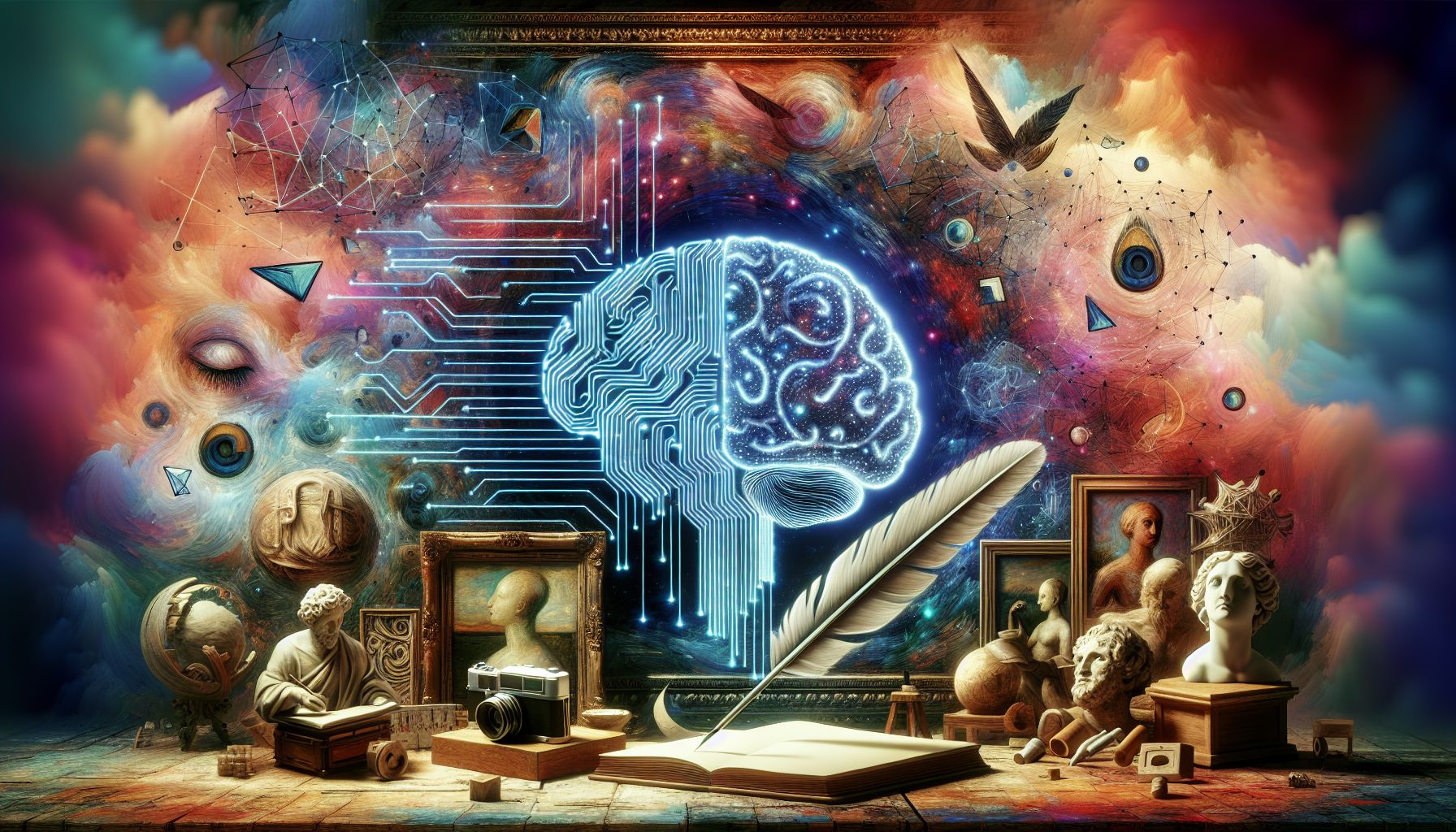
Hey tech enthusiasts and daydreamers! Today, I want to talk about something that’s been keeping me up at night: Artificial Intelligence in the creative arts. Imagine an AI composing a symphony or painting a masterpiece—pretty wild, right? If you’re anything like me, the idea of machines creating stuff that touches the soul is both awe-inspiring and a bit freaky. But hold onto your keyboards because we’re venturing into territory where silicon meets sentiment.
From Code to Canvas: The Evolution of AI in Art
So, where did this all start? Well, back in the day—like not that long ago—machines were limited to doing what we explicitly programmed them to do. Creativity was a human thing, or so we thought. Fast forward a few years, and suddenly you’ve got AI-generated art pieces selling for hundreds of thousands of dollars. Yep, in 2018, Christie’s auction house sold an AI-generated portrait called “Edmond de Belamy” for a cool $432,500. It was created by a Paris-based group called Obvious. Who would’ve thought?
The art was made using a specific kind of AI called Generative Adversarial Networks (GANs). In simple terms, it’s a neural network that tries to “imagine” new images by learning from thousands of existing ones. It’s two AIs competing with each other, one generating attempts while the other critiques. It’s like a frenemies scenario, but for robots.
From Shakespeare to Siri: AI’s Literary Aspirations
Alright, so we’ve got AI dabbling in the arts, but what about writing? Sure, an AI like GPT-3 can whip up a poem or a plot twist quicker than most of us can say “writer’s block.” Is it Shakespearean? Maybe not. But it does raise the question: will we soon be curling up with books written by our AI overlords? The potential is there, but AI still lacks the depth of emotion and the twist of human unpredictability that makes stories so relatable.
Here’s the kicker, though: AI can help authors brainstorm ideas, avoid clichés, and even suggest character developments. It’s like having a really smart, non-judgmental writing buddy. Imagine editing your novel and the AI whispers, “Hey, maybe that dragon could have a softer side?” Who wouldn’t want that kind of creative sounding board?
Tinkering Beats and Binary: AI in Music
I’ve always thought music was the last bastion of human creativity, perhaps because it’s so tied to emotion. For ages, the idea that a machine could compose anything meaningful was laughable. Well, folks, the joke’s on us now. AI systems like OpenAI’s MuseNet are creating original compositions that span multiple genres and styles. Yes, even country music—bless its heart!
One key player in this revolution is AIVA (Artificial Intelligence Virtual Artist), a program built to write music. It’s already been used for film scores, video games, and advertisements. And let’s not forget that AI-generated music can be tailored in real-time to set moods or respond to audience feedback. No need for playlists when your AI DJ is literally creating music on the fly, catered just to you.
The Human Element: Collaboration Over Competition
Now, before anyone gets all rebellious, throwing paintbrushes or guitars in anguish, let’s talk about collaboration. The goal isn’t to replace artists, writers, and musicians but to boost their capabilities. Think of AI as an infinite tool palette, not a rival Mozart. It’s about exploring uncharted creative territories we’ll never fully realize on our own.
Plus, AI can take care of the nuts and bolts of editing, leaving the creator to focus on the big picture. Or really tiny pictures if that’s your thing. It’s your art, after all.
A Creative Revolution or a Slow Burn?
Alright, here’s where I put on my speculative hat and gaze into the crystal ball. What does the future hold for AI in creative arts? Are we on the brink of a new Renaissance, or is this just an overhyped tech trend with a great story? The jury’s still out. But here’s my two cents: AI will become a big part of the creative process, changing how art is made and consumed.
That being said, expect some bumps along the road. Issues of copyright, moral rights, and creative ownership are sure to ignite heated debates. And let’s not forget the philosophical puzzle of answering whether machines can truly create art—or if they’re simply mimicking human creators.
Wrapping It Up
As we stand at the intersection of technology and creativity, let’s embrace the unknown, experiment boldly, and remember the power of the human touch. Automation doesn’t have to mean the death of originality. Instead, it holds the promise of unexplored possibilities and fresh collaborations between human and machine.
So, dear friends, let’s pick up our brushes, instruments, and notebooks and see what this AI-infused future holds. I can’t wait to hear your thoughts. Maybe you’ll be the next digital Da Vinci or algorithmic Austen. Who knows what marvels await us on this creative adventure?
Cheers to the human spirit—and its new, AI-powered sidekick!