The Budget You Should Actually Care About
I know. Budget documents are not exactly thrilling weekend reading. They’re dense, they’re full of acronyms, and there’s always that moment where you’re scrolling through page forty-seven and realize you have no idea what you just read. But here’s the thing: your city council’s 2025 budget is basically a map of what your neighborhood is going to look like for the next twelve months. It determines whether potholes get fixed or ignored, whether that community center stays open on Saturday mornings, and whether your street gets new trees planted or whether the old ones just keep getting trimmed back further and further.
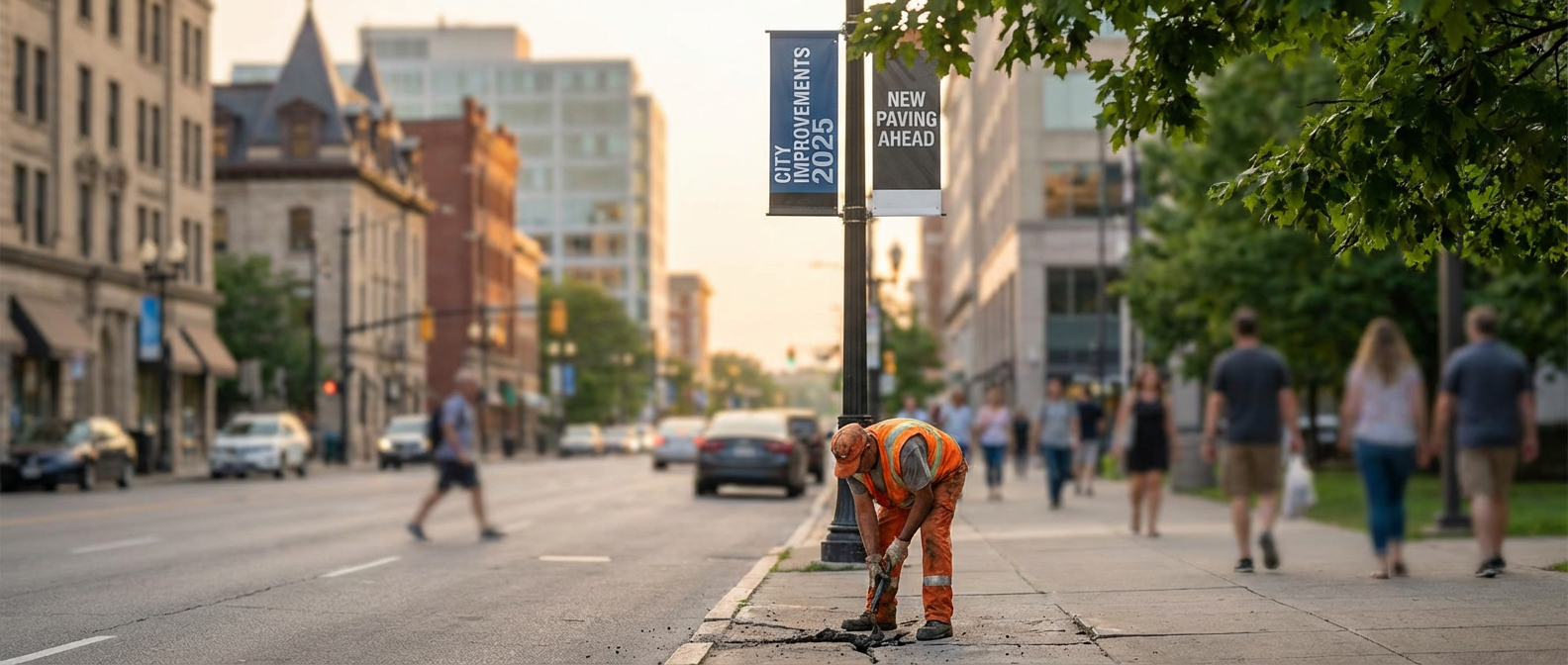
Most of us never look at these documents. We show up to complain about something specific, or we don’t show up at all. And then we’re surprised when things don’t change the way we hoped they would. The surprising part, though, is that the people making these decisions are usually working from the exact same constraints we’d be working from if we were in their position. It’s not that they don’t care about fixing your street. It’s that they’re trying to solve three different problems with the same dollar, and those problems are in genuine conflict with each other.
The Real Squeeze: Infrastructure Versus Everything Else
Here’s what’s happening across the country right now, and it’s almost certainly happening in your city too. Municipal governments everywhere are facing the same pressure: roads and bridges are crumbling, and fixing them is brutally expensive. At the same time, parks and recreation programs are facing cuts. This isn’t random. According to the National League of Cities 2025 State of Cities Report, two-thirds of municipalities increased spending on infrastructure last year, but 43 percent of those same cities simultaneously cut their parks and recreation budgets. Those aren’t two separate stories. That’s one story: cities chose roads over playgrounds.
This choice makes sense if you think about it structurally. A pothole doesn’t care about your budget constraints, and neither do your residents when they hit one at forty miles per hour. A bridge that’s deteriorating isn’t getting better on its own. But here’s where the conflict gets real: people don’t experience infrastructure spending the way they experience a closed recreation center. You notice when the pool shuts down because your kid asked about swimming lessons. You notice when the community garden gets paved over for parking. You might not notice the preventative maintenance work that kept the intersection from becoming dangerous, but you definitely notice when it doesn’t happen.
There is some good news in this picture. The federal government allocated $1.2 billion through the USDOT RAISE Grants Program specifically for local road and bridge projects. That money is real and available right now. The catch is that your city has to apply for it, and that requires staff time and expertise that stretched municipal governments don’t always have to spare. This is one of those moments where paying attention actually matters.
The Post-Pandemic Hangover Nobody Talks About
Three years ago, federal COVID relief money arrived in cities like an unexpected gift. It was temporary, it was substantial, and it allowed municipalities to cover gaps and fund programs that normally wouldn’t fit in the budget. Then December 2024 happened, and most of that money expired. According to the Government Finance Officers Association, over 200 municipalities restructured their core budgets in early 2026 specifically because those federal funds had run out. That’s not a small number. That’s a wave of cities all realizing at the same time that they had gotten used to spending money they didn’t actually have.
This creates a particular problem in cities that grew quickly in the last five years. Your property tax revenue probably went up, which sounds great until you realize that it went up less than inflation did, especially if you live in a Sunbelt city where lots of new people moved in. The Urban Institute found that property tax revenues grew an average of 4.8 percent nationally, but that growth lagged behind inflation in rapidly growing regions. Translation: your city has more people, more demand for services, and revenue that’s not keeping up with the actual cost of providing those services. That math doesn’t work for very long.
The Disagreement That Matters
This is where people genuinely disagree, and the disagreement isn’t stupid on either side. Some council members will argue for cutting programs to protect core services. Others will argue that you can’t cut your way to a healthy city, and that programs like youth centers and community pools are the infrastructure that holds neighborhoods together. Both arguments have merit. Both are also incomplete without the other perspective.
Here’s what I’ve noticed from actually sitting through budget meetings: the people who show up to speak are almost always more informed and more reasonable than the people talking about them afterward. The person arguing for more money for street repairs and the person arguing for keeping the community center open usually aren’t enemies. They’re both right that something important might not get funded, and they’re both trying to figure out which important thing can’t be sacrificed.
What actually shifts these conversations is specificity. When someone gets up and says “I attend the programs at this center, and here’s what it means to my family and my neighborhood,” that carries weight. When someone brings data about how many potholes are on their block and shows pictures, that carries weight too. According to a 2025 analysis from the Pew Charitable Trusts, residents who actually attend budget hearings are three times more likely to successfully petition for line-item changes specific to their neighborhoods. That’s not because council members suddenly become more generous. It’s because showing up with specific information changes what council members can justify in their decision-making.
What You Actually Do With This Information
Here’s my pitch, and I mean this genuinely: read your city’s 2025 budget. Not all of it. Just the parts that matter to your neighborhood. Go to the next budget hearing. Bring one specific, real thing you care about. It doesn’t have to be eloquent. It just has to be true and specific to your experience living here.
The budget isn’t decided yet for most of us, even though we’re already in 2025. There are amendments coming. There are priorities that haven’t been finalized. The question is whether the people deciding these things hear only from the usual voices, or whether they hear from people like you. That’s not naïve idealism. That’s how these systems actually work.